Beyond the Big Five: Africa’s Amazing Birds
Considering a safari? It’s certainly a trip of a lifetime to roam the bush, jungles and savannah of Africa’s jaw dropping geographies. But while everyone in your jeep is on edge waiting for the next big mammal to make an appearance, tune your eyes to the tree tops where a tiny world of wonder will unfold before you.
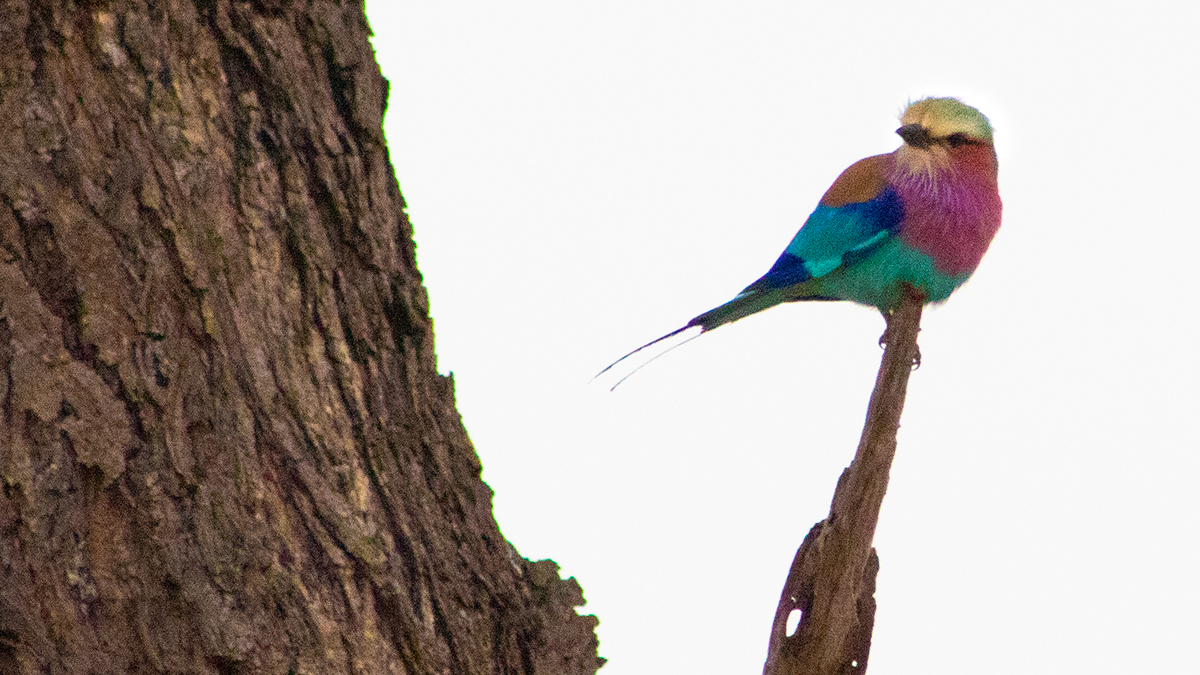
Lilac Breasted Roller © Shelley Noeldechen
In this post, I’ll introduce you to some of the most unique, fantastically colorful, and rare birds you are likely to spot if going on a safari in South Africa, Zimbabwe, Zambia, or Botswana. My hope is that anyone preparing for an African trek can get just as excited to experience the wondrous winged world as you will be for the land roamers. Open your adventurous heart to the birds, and your “in between” time waiting for the big five will be filled with fun.
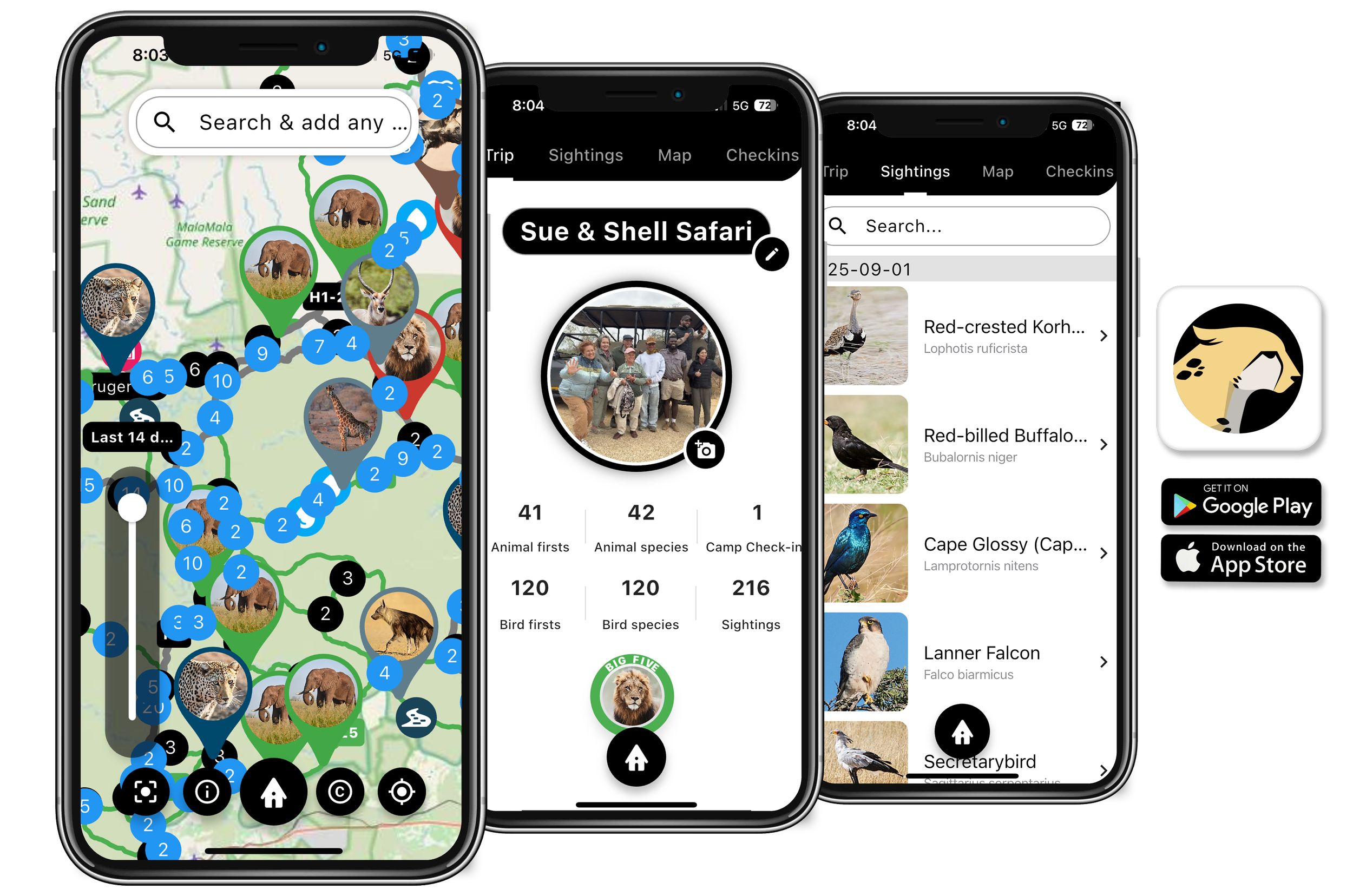
What’s the best app for animal and bird spotting while on safari?
I visited Kruger, Zambezi and Hwange National Parks and used the Kruger Guide app which did an outstanding job of covering all three regions. The app provides a user-powered live sightings board of Kruger, and personal trip sightings log. I highly recommend it.
Tips for Spotting
You don’t need to be a pro, memorize hundreds of birds or have an expensive telephoto lens. Here’s some simple tricks to help you make the most of your safari bird spotting:
Don’t be shy. Ask your guide.
Safari guides are incredibly experienced and well informed. If you tell them you are interested in birds, they will be all too happy to make that a feature of your outings and a focus of their attention.Get a good pair of binoculars. 10x magnification with a 42mm or 50mm diameter are best.
They will not only help with bird spotting, but animal spotting too!Want to capture photos? You don’t need a heavy, expensive ultra-telephoto.
If you’d rather capture photos, you can get a mid-range telephoto zoom lens and forgo the binoculars. I used a Canon EOS with 75-300mm zoom.
Top Birds You Can Easily Spot on Safari
The Big Guys
There is no lack of impressively large birds in Africa. This category includes huge eagles, herons, and storks. All surprisingly common if you make a effort to look.
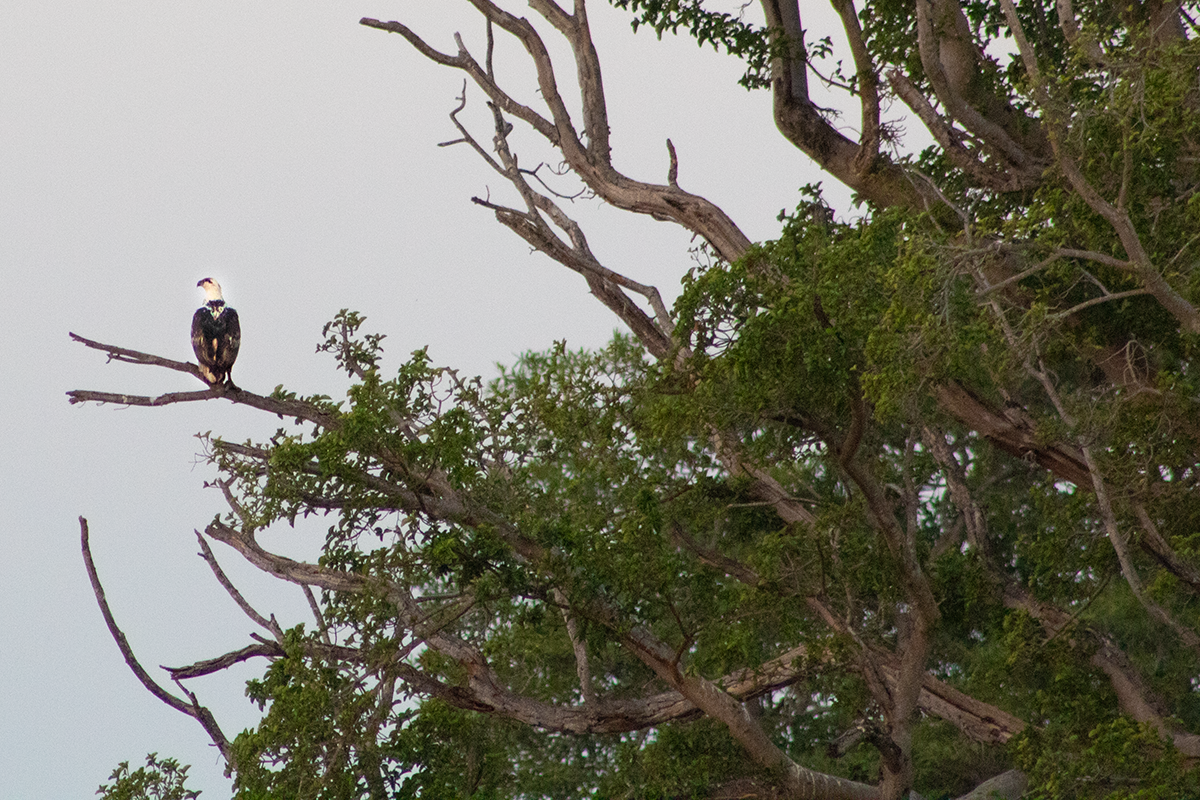
African Fishing Eagle
Up to 30 inches with a wingspan up to 8 feet
These were very common in Kruger along the rivers and streams, with at least five spotted from various distances over our four days of drives. Shown left is a juvenile. Adults have less mottling on the wings and resemble a Bald Eagle without the white tail.
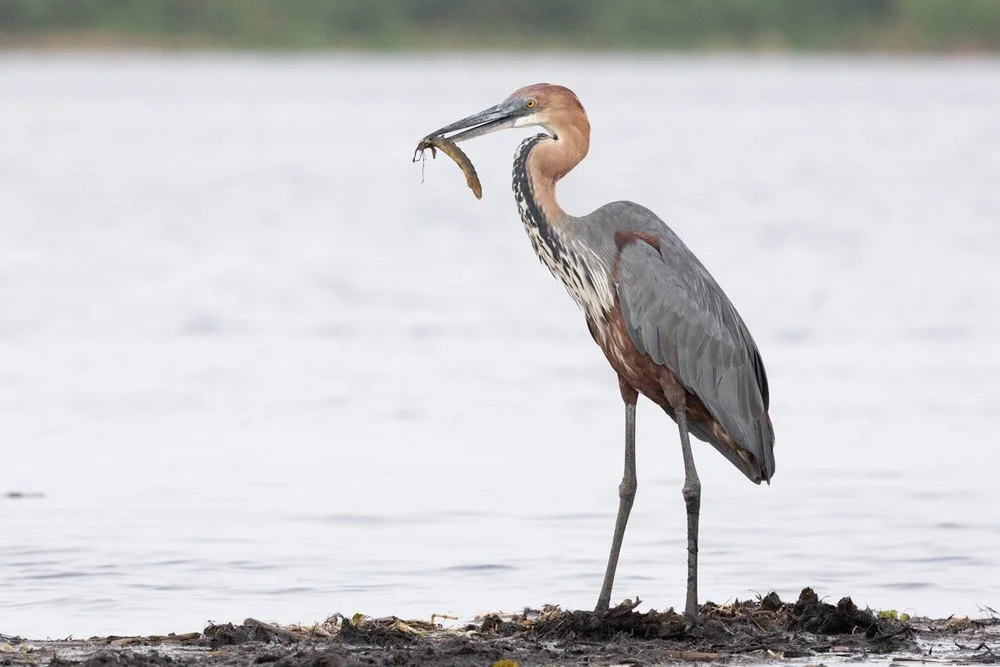
Goliath Heron
Up to 5 feet tall with a wingspan up to 7.5 feet
The largest heron species in the world is a sight to behold. Their beautiful markings and pink color blend perfectly with the African sunset reflecting on the water. We only spotted one of these from a distance during our trip. This photo is courtesy of Observation.org.
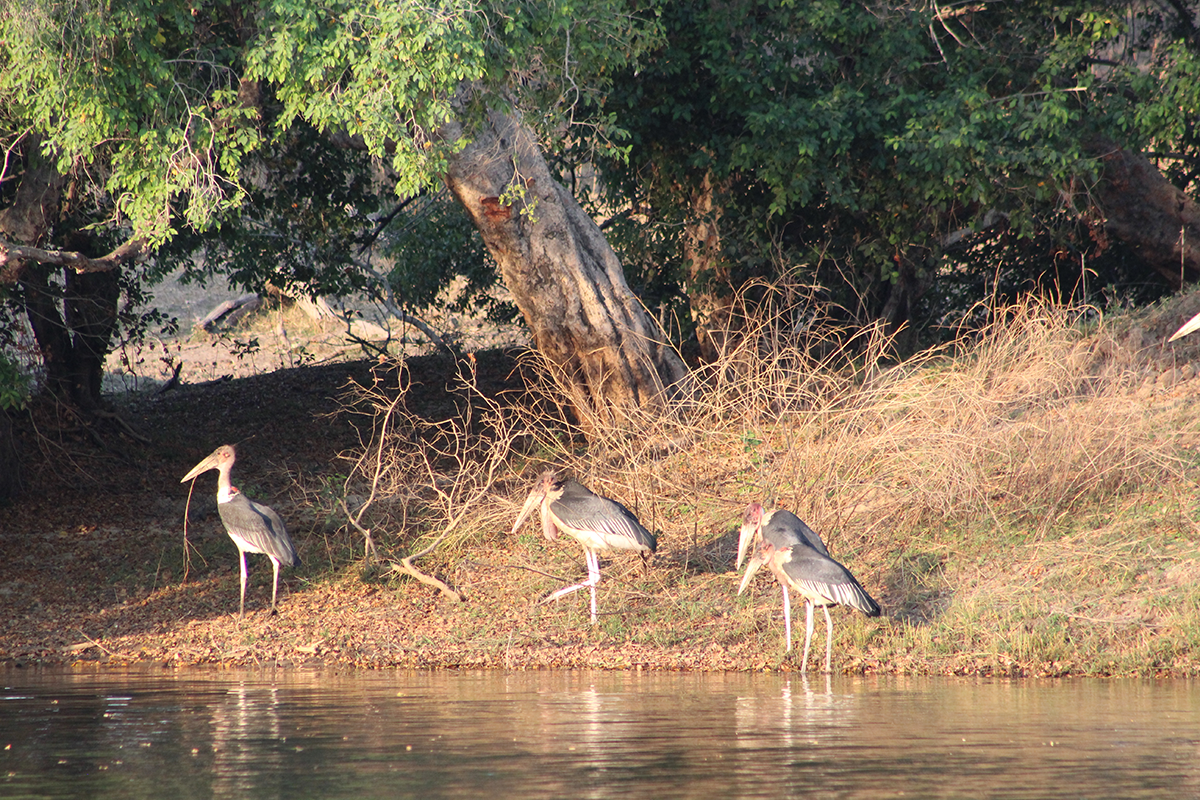
Marabou Stork
Up to 5 feet tall with a wingspan up to 9 feet
Though classified as one of the “Ugly Five,” these massive birds are incredibly majestic. When you come face to face with one, it becomes clear why they are the storks depicted as delivering babies. They certainly are big enough to be able to carry one. Despite being one of the biggest birds on the planet, they can amazingly perch in the highest treetops because they only weigh about 20 pounds. Marabou’s were everywhere on the Zambezi river and easily spotted.
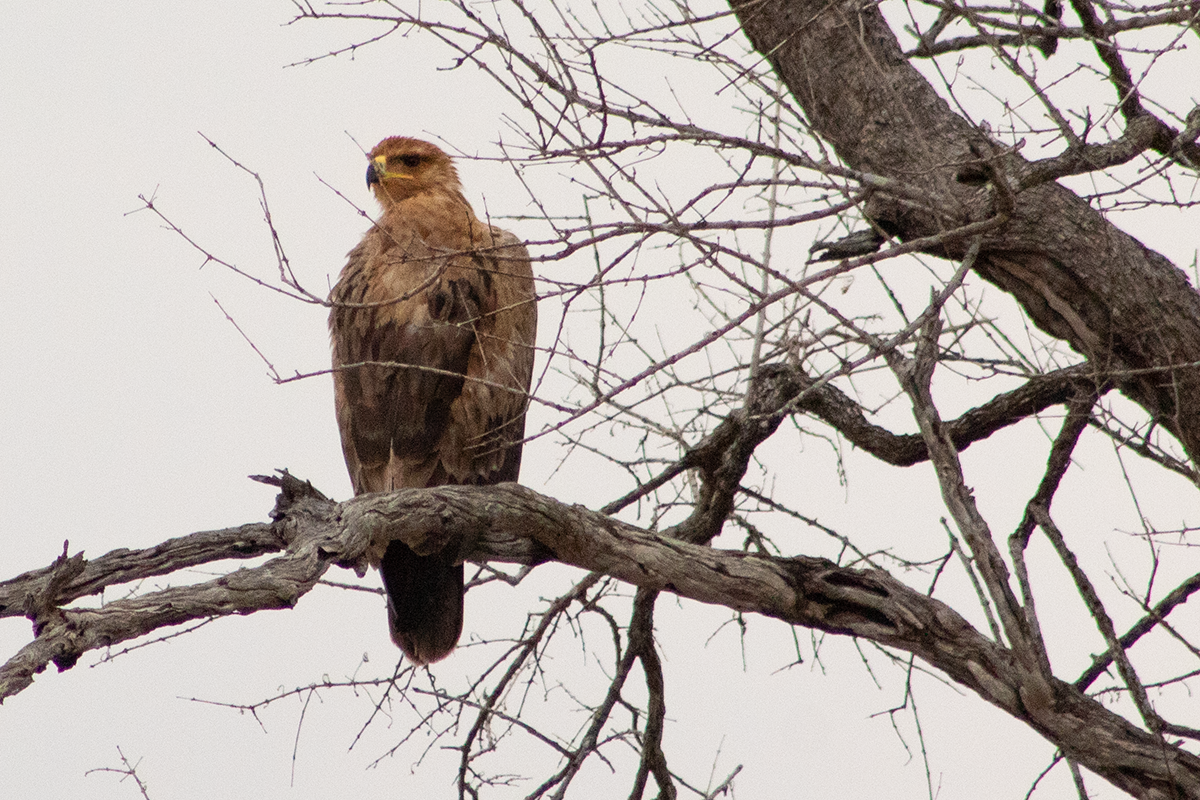
Tawny Eagle
Up to 30 inches with a wingspan up to 6 feet
The Tawny is very common in Kruger and throughout east central Africa. We saw about twelve at various distances throughout our trip. Though common, their brown plumage is a good camouflage so you do have to look for them.
The Common Uncommons
Nothing is common in Africa. Not even the “common” birds you’ll see everywhere.
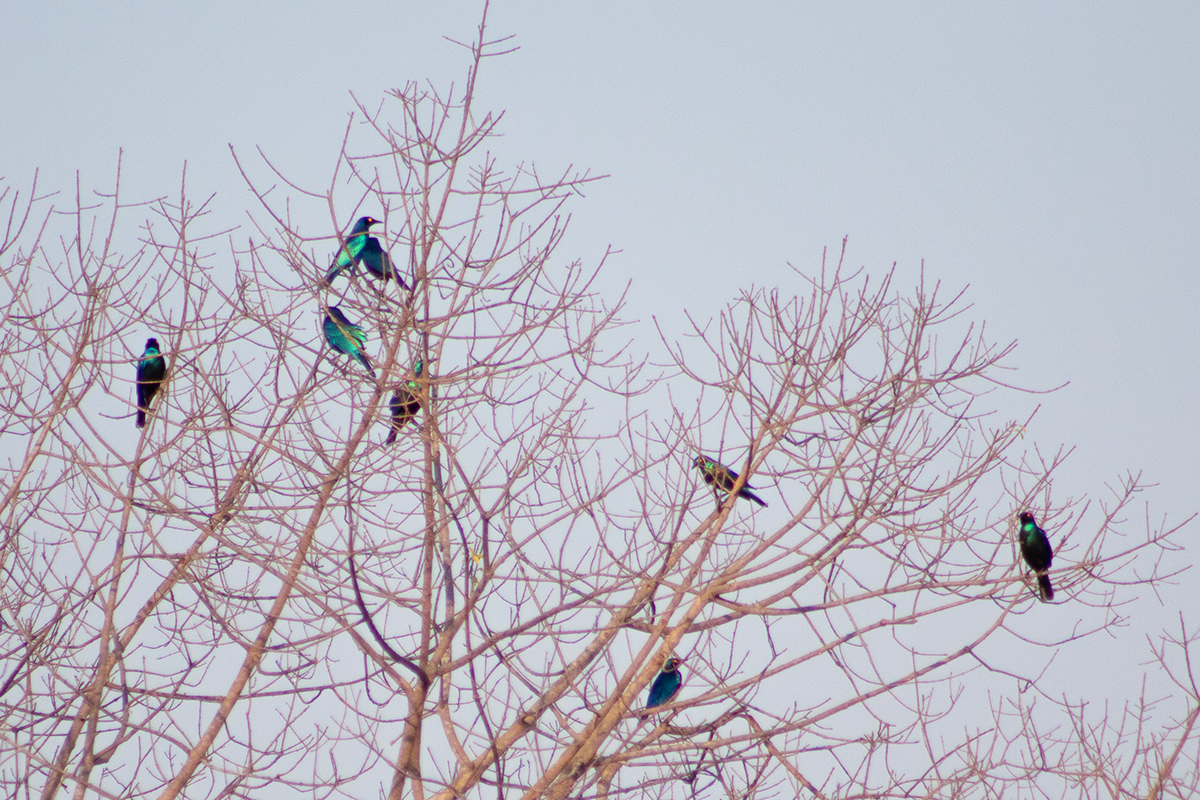
Blue Starlings (various)
There are 5 different kinds of metallic blue starlings the region and we spotted all of them multiple times. These birds are everywhere. A bit like a grander version of NYC pigeons. They are easily identified by their stunning blue colors that literally glow as they reflect the sunlight.
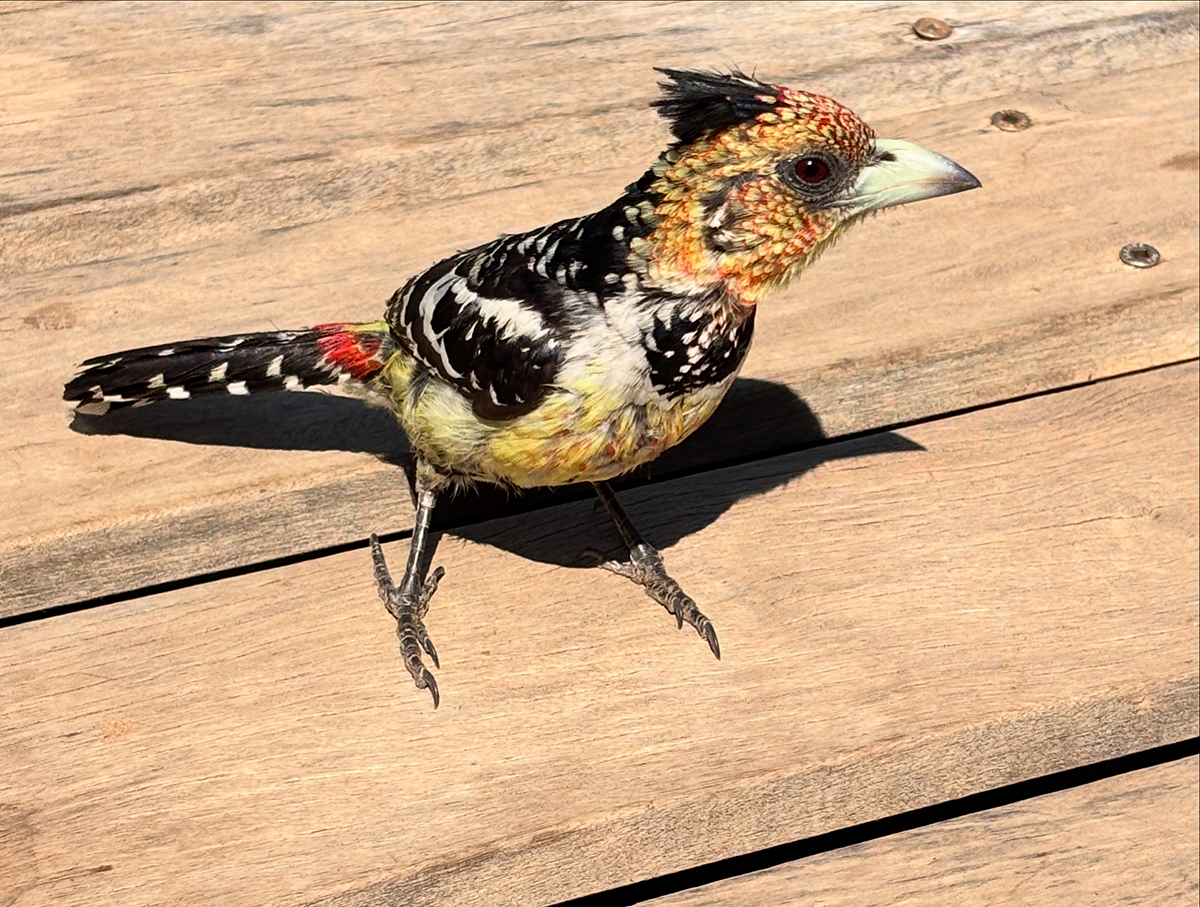
Crested Barbet
A personal favorite for it’s singular color and shape. The crested barbet was the friendliest bird I encountered, repeatedly coming right up to me and hanging out for hours while relaxing on my deck at the Victoria Falls River Lodge.
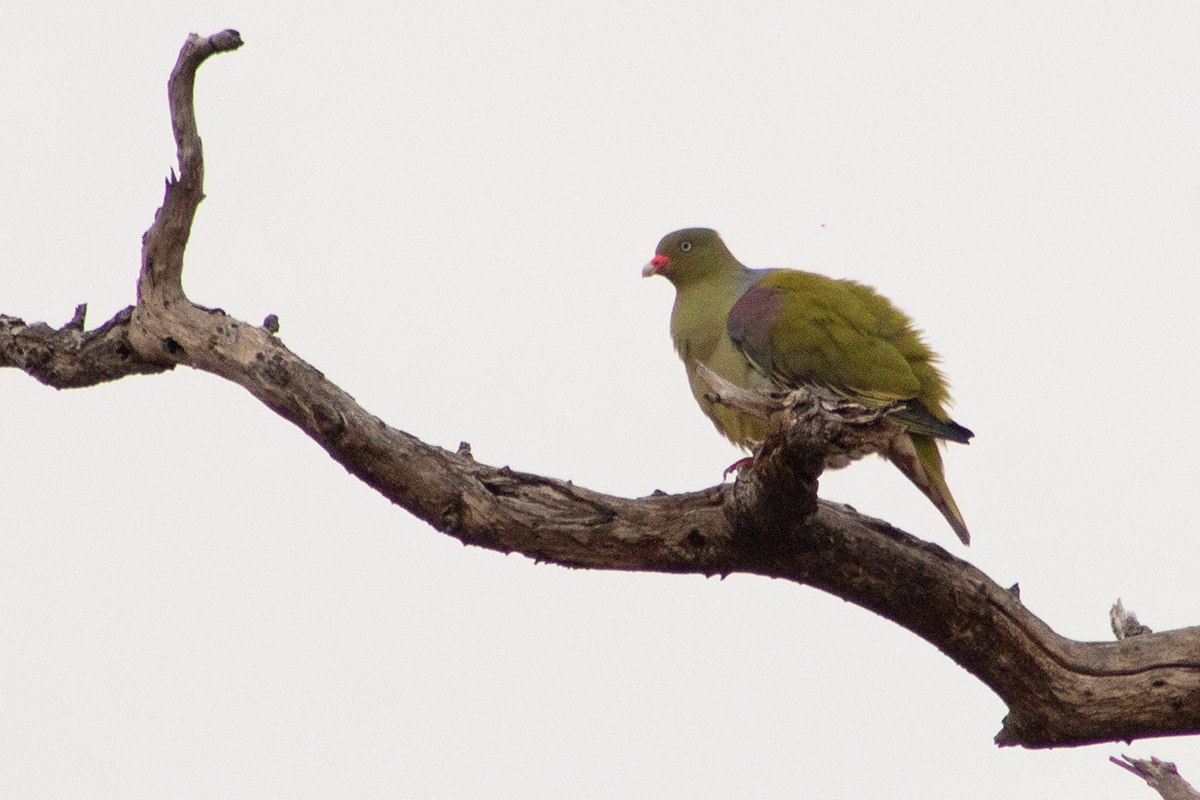
Green Pigeon
Proof that even the most common, everyday birds are just better in Africa. The green pigeon sports a dreamy blend of greens and grays that is just lovely. Though common, their more subtle coloration blends in the bush so keep your eyes peeled for a glimpse of these guys.
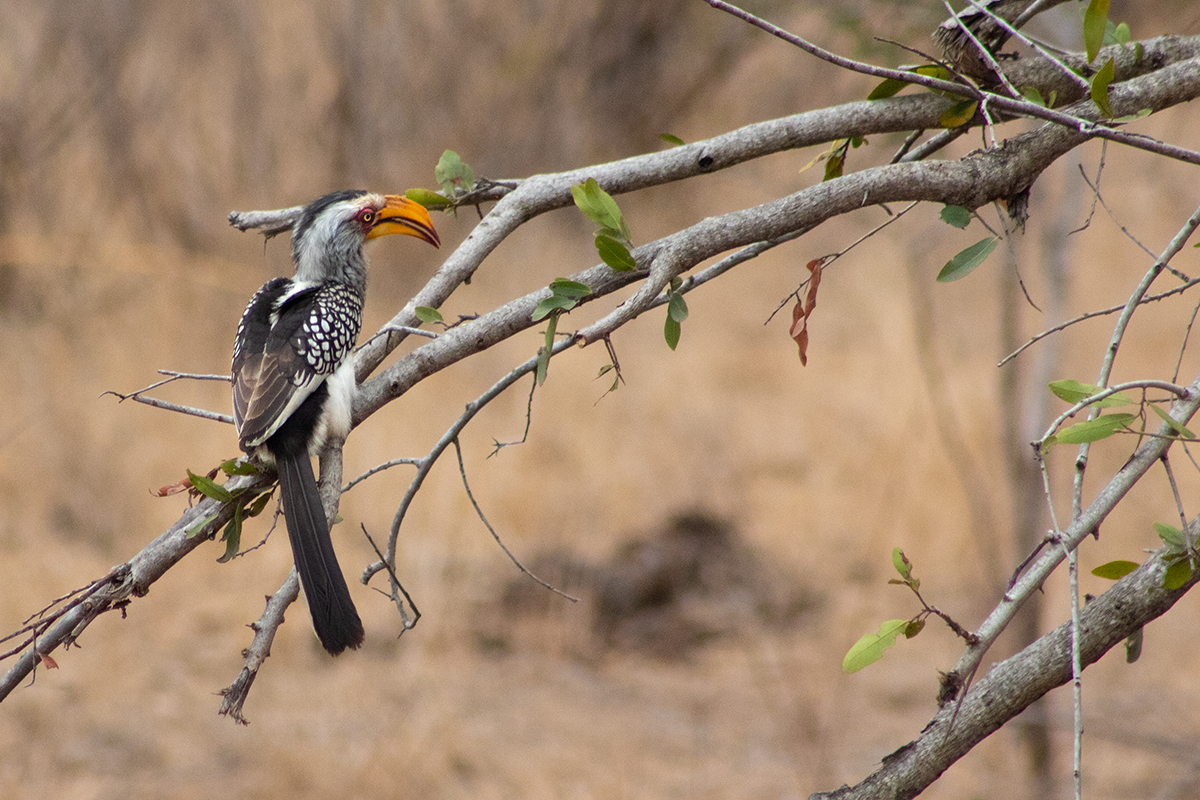
Hornbills
Hornbills must be the most populous birds in Africa, with the yellow hornbill leading the party. It makes sense why the Lion King made Zazu a yellow hornbill, and why a group of them is referred to as a “party.” These cheeky, fearless characters are literally EVERYWHERE. They know they own the bush and have no issue dive-bombing your jeep or moving in for a closer look.
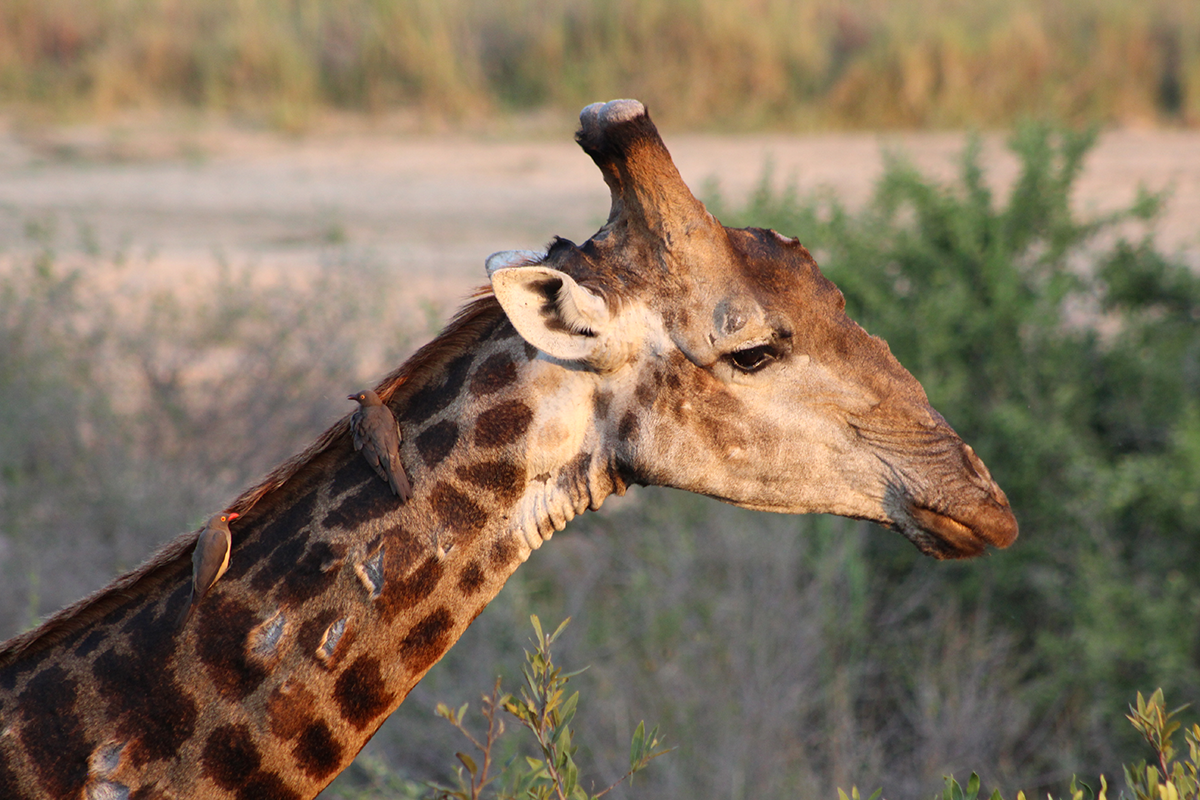
Oxpecker
Known as the “beauticians of the bush” because they eat the bugs, Oxpeckers are commonly spotted on giraffes and other animals. Look for the beak and eye color which differentiate the red billed from the yellow billed.
The Show Stoppers
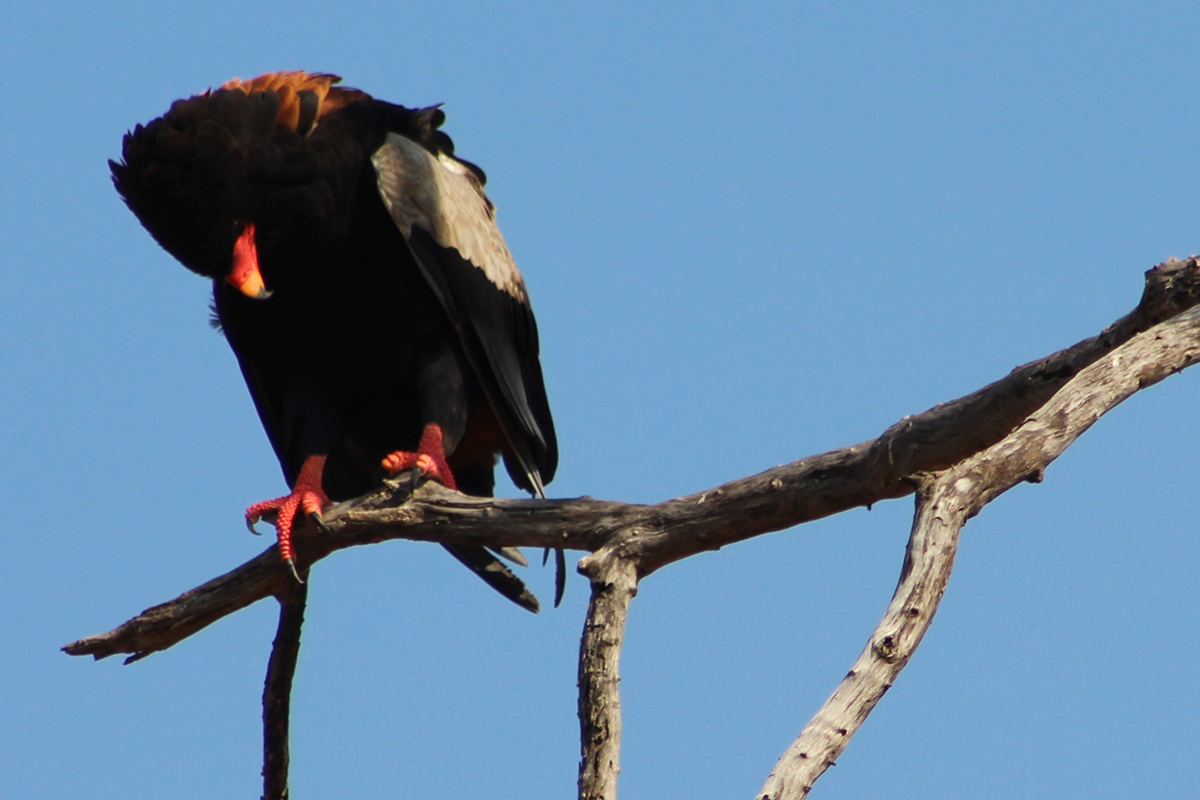
Bateleur Eagle
Up to 28 inches with a wingspan up to 6 feet
These are classified as medium sized eagles, but when you run into one, it doesn’t feel medium at all. We spotted three while on our trip, but only got up close and personal with this one on the last day. They are incredibly striking with toucan like striped beaks, and jet-black bodies contrasted with pops of gray and brown.
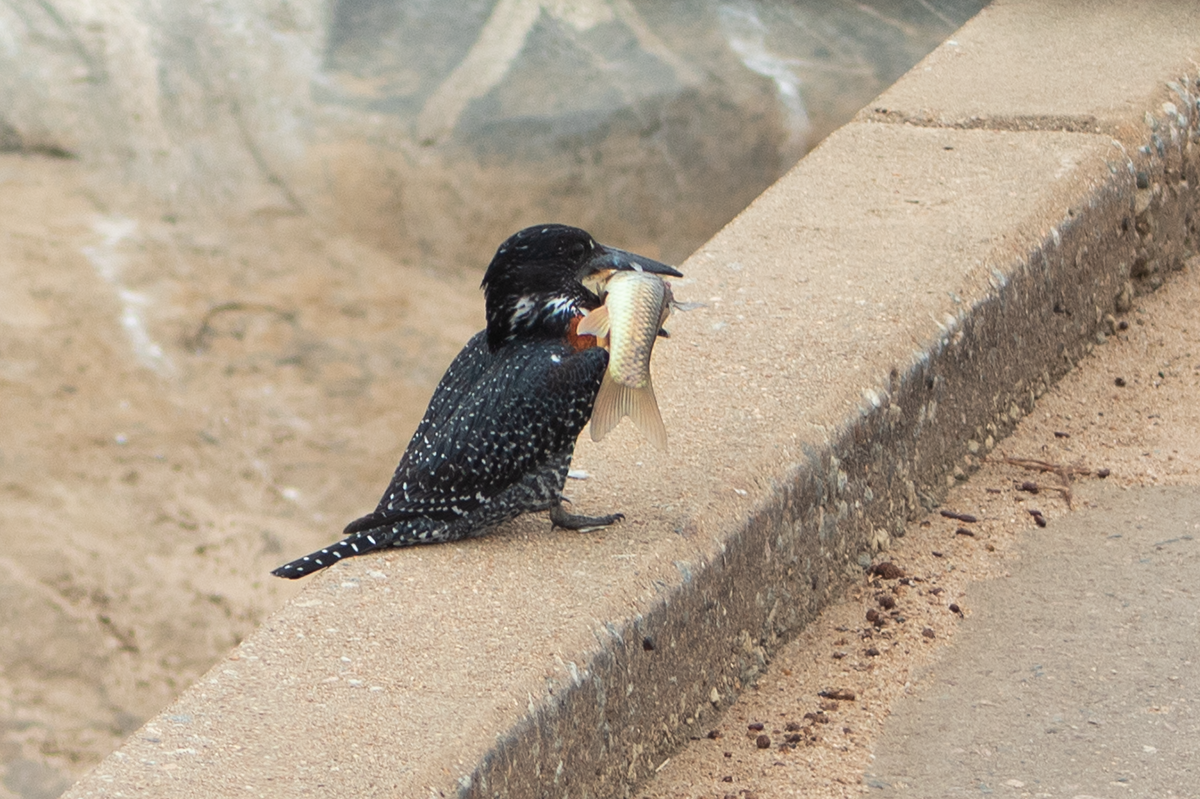
Kingfishers
Kingfishers are just plain cool. Identifiable by their longish straight beaks and compact heads. I was blown away by how many different species and how prevalent they were in Kruger National Park. Many of them have wonderful sectional markings and striking blue wings. But the show stopper on our trip was the spotting of a Giant Kingfisher (up to 19 inches!) with a fresh catch on the side of a bridge over the Sabi.
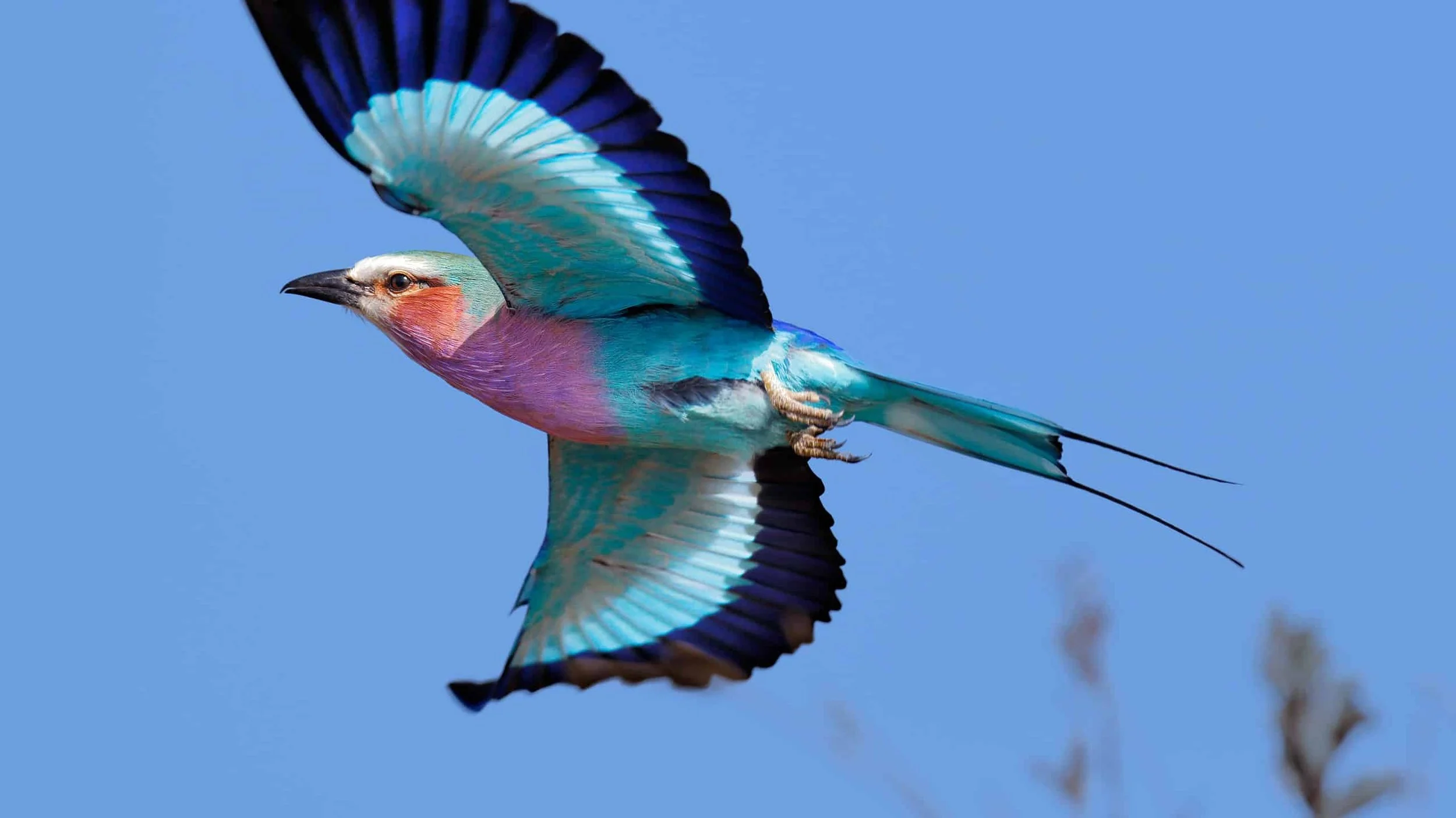
Rollers
Rollers are another stunningly beautiful species and the Lilac Breasted was the one we saw the most. The rainbow of colors on these birds is breath-taking. Don’t turn away if you spot one! It gets even better when they take flight and an incredible array of blues are revealed in stark stripes across their wings.
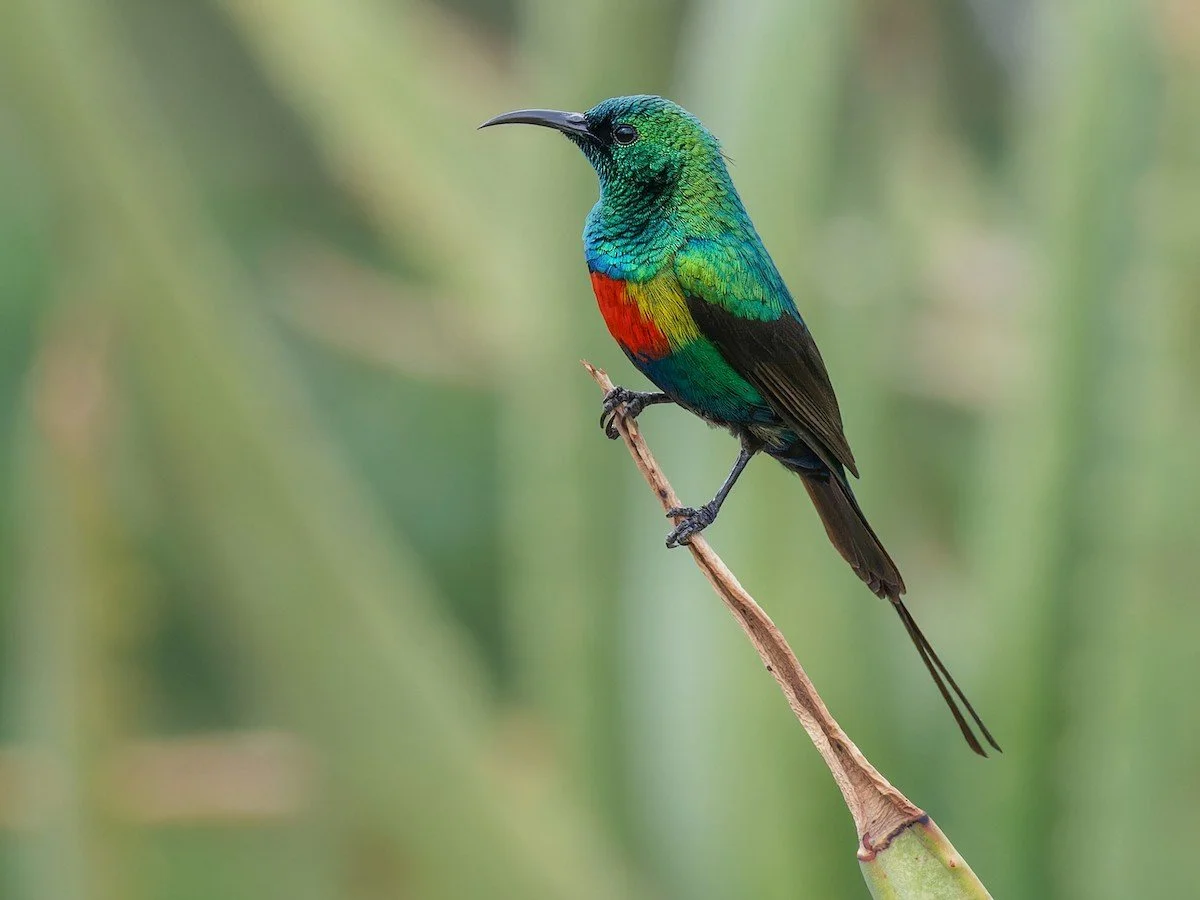
Sunbirds
Rounding out the list of show-stopping, sun-reflecting, metallic magnificence are the sunbirds. These are smaller, and much harder to spot but they are around if you keep a keen eye. The only semi-good photo I got of one was still too far away for a really clear shot, so I’m sharing this photo courtesy of Birds of the World.
The Rare and Endangered Gems
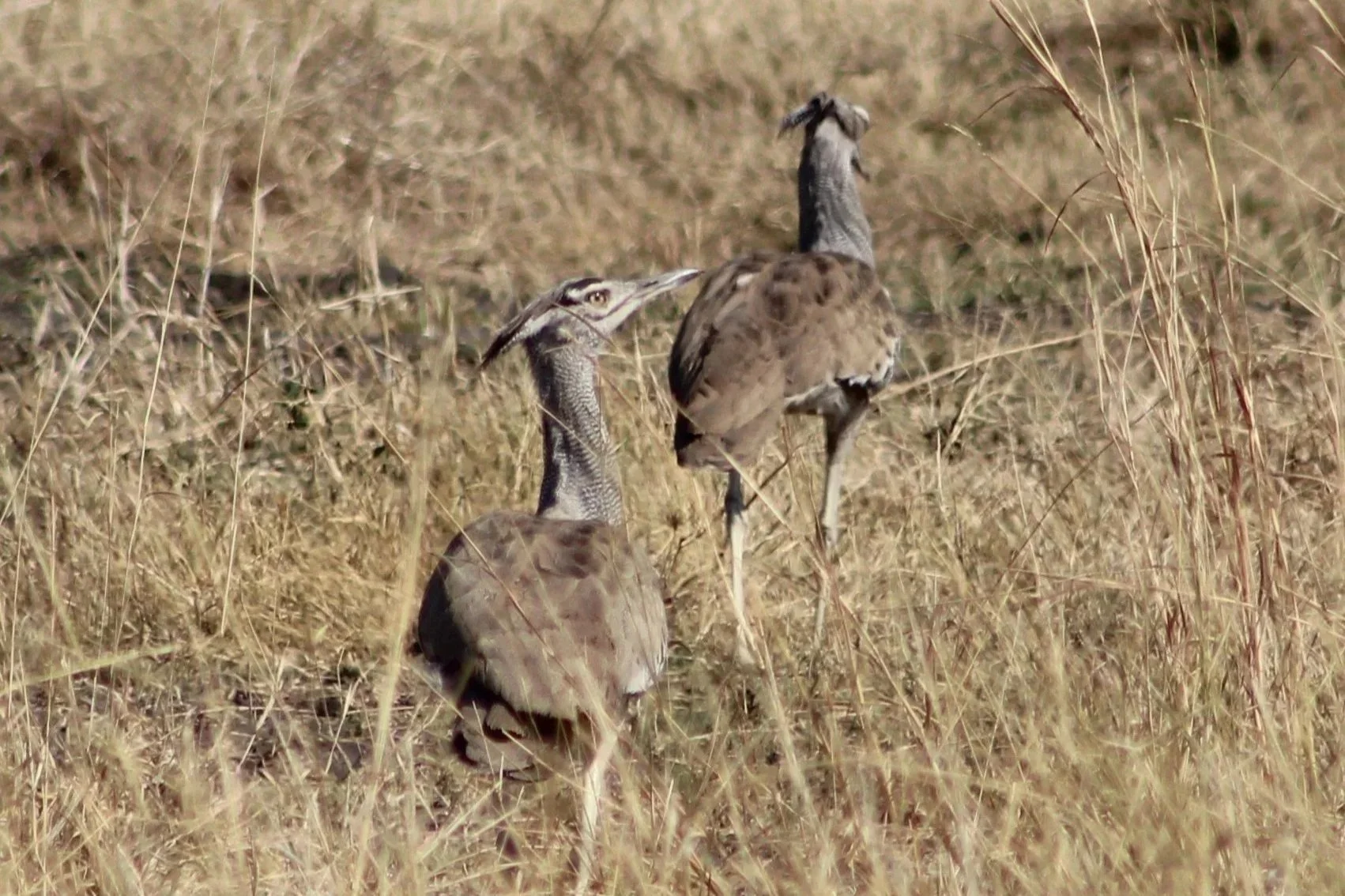
Kori Bustard
Up to 5 feet tall with a wingspan up to 9 feet
As unique as it’s name, this funky-looking ground bird is the heaviest bird on earth that can take flight, weighing in up to 40 pounds. They are also incredibly rare. By the last day of our safari I had given up hope, when we turned a bend and two emerged from the grasses of Hwange National Park. Needless to say, I was excited beyond belief.
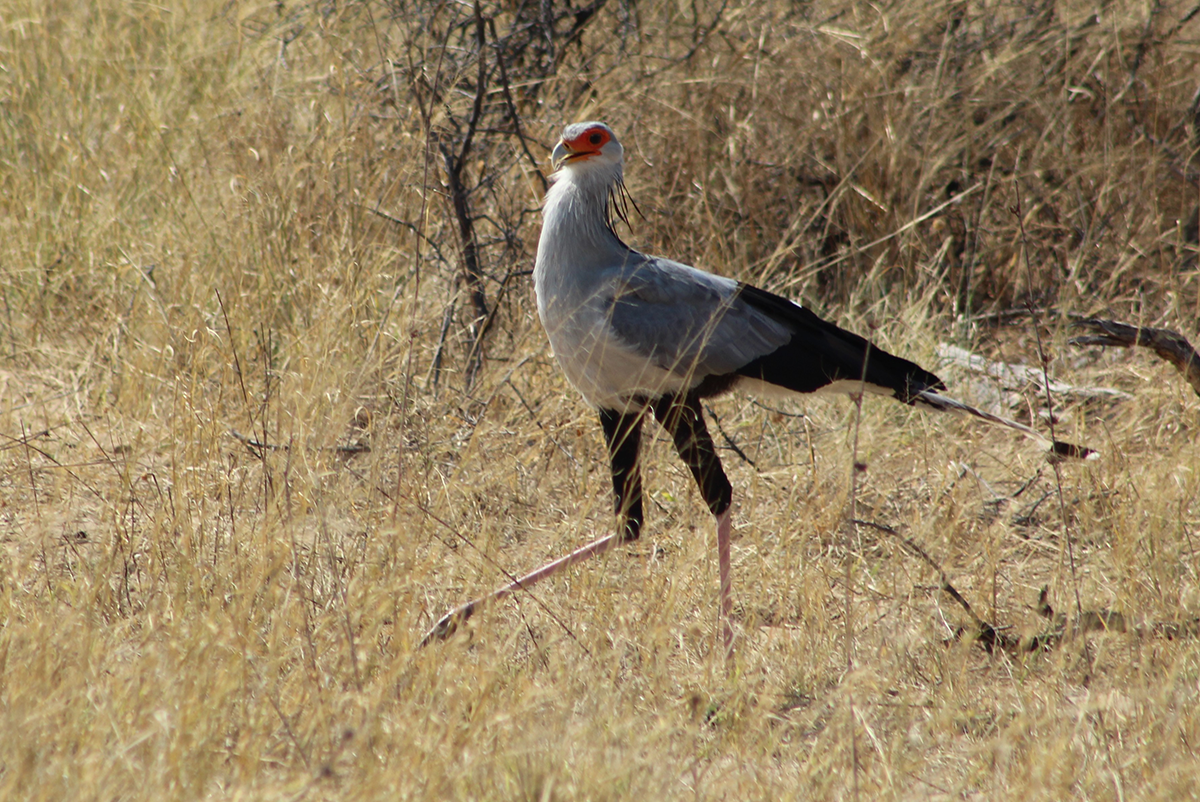
Secretary Bird
Up to 5 feet tall with a wingspan up to 7.5 feet
One of the rarest, most unique birds on earth. These graceful, long-legged terrestrial raptors are endangered and you are very blessed if you spot one. Their singular look and size had caught my attention in the guide book but I had given up hope of seeing one when – ironically – just moments after the kori bustards made an appearance, out came two secretary birds who crossed the road right in front of us. It was if Africa was putting on a grande finale just for us!
All photos © Shelley Noeldechen unless otherwise noted.

Experience the wonders of Africa’s wildlife and people on a life-changing journey into the bush.
SUGGESTED LENGTH: 10+ days
TRIP HIGHLIGHTS: Spot the big 5, get up close and personal with elephants, take a safari cruise and be pampered on a luxury train
This trip book comes as a beautifully designed, flexible itinerary in downloadable PDF format that includes:
The perfect mix of cities, safari parks and experiences to immerse you in the culture you’re visiting
Suggested lengths of stay to guide your planning
A range of carefully curated restaurant and hotel recommendations for all tastes and budgets
Thoughtfully planned routes to maximize every moment